
What Is Machine Learning? A Practical Guide for Business Leaders
A non-technical explanation for executives.
The Core Challenge
In today’s rapidly digitizing East African economy, the primary hurdle isn't a lack of data; it’s the inability to extract actionable intelligence from it. Business leaders are often drowning in spreadsheets and customer logs, yet struggle to predict market shifts, optimize supply chains, or personalize services at scale. The manual analysis of these vast datasets is no longer sustainable, leaving decision-makers to rely on intuition rather than empirical evidence, which often results in missed opportunities and operational inefficiencies.
Why It Matters
The cost of inaction is no longer just a missed growth target—it is an existential risk. As local markets become increasingly competitive and global players enter the region with data-driven models, companies that fail to adopt machine learning face "algorithmic obsolescence." By sticking to legacy processes, leaders are effectively leaving money on the table, allowing more agile competitors to capture market share through superior forecasting, reduced waste, and highly tailored customer experiences. Staying on the sidelines is a strategic choice to fall behind.
The Practical Solution
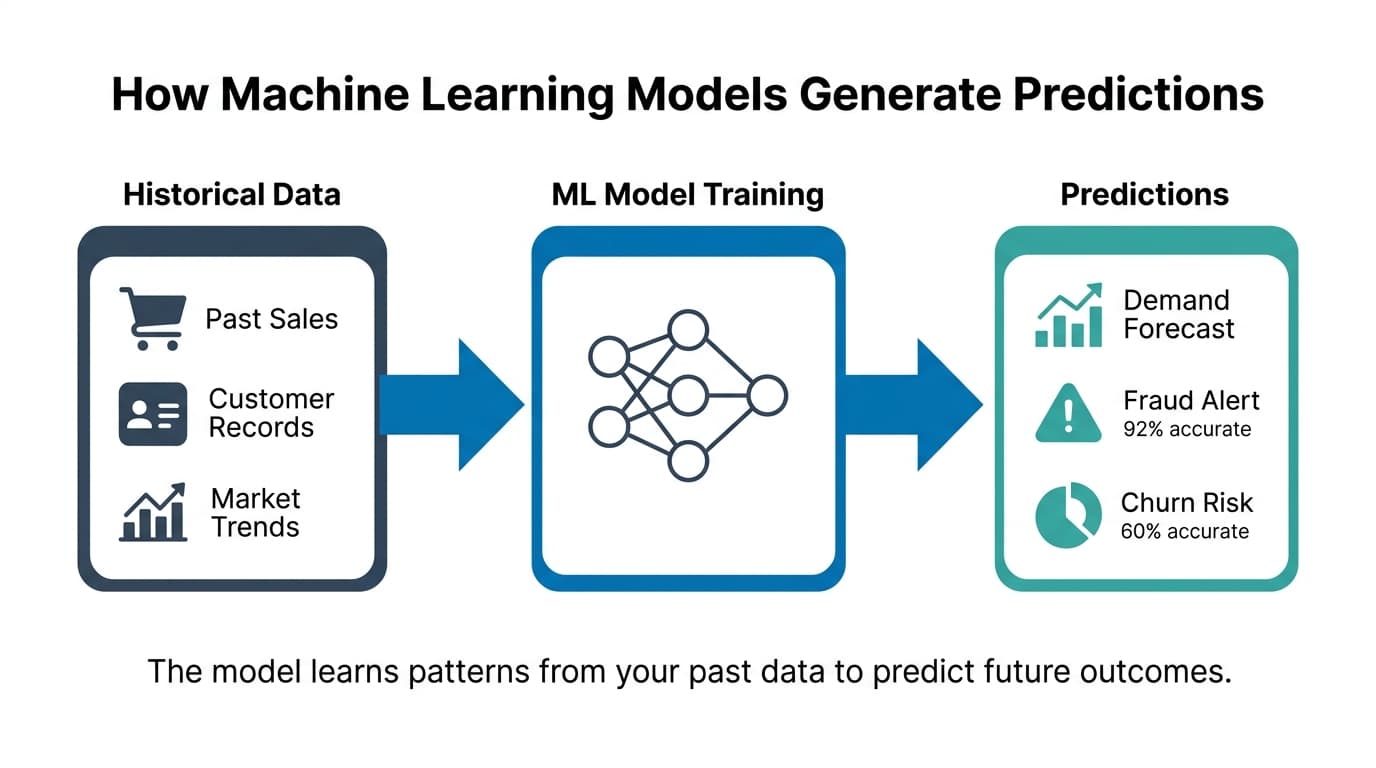
At its simplest, machine learning is a way of teaching computers to learn from patterns rather than following rigid, pre-programmed instructions. Think of it as a digital apprentice: you feed it historical data—such as past sales, weather patterns, or crop yields—and it identifies the hidden correlations that a human eye might miss. It then uses these insights to make highly accurate predictions about the future. It is not about replacing human judgment; it is about providing your team with the precision tools needed to make faster, smarter, and more profitable decisions.
Key Takeaways
- Machine learning turns your historical data into a predictive asset rather than a digital archive.
- It is a tool for optimization, allowing you to reduce operational costs and improve resource allocation automatically.
- Implementation is an iterative process; start by solving a single, high-impact business problem rather than attempting a total organizational overhaul.