
What Is a Data Pipeline? (Without Technical Jargon)
Use a simple analogy to explain ETL and modern data pipelines.
The Core Challenge
In today’s fast-paced East African market, your organization is likely sitting on a goldmine of information—customer feedback, sales records, and operational logs—but this data is trapped in silos. When your information is scattered across different departments, spreadsheets, and legacy systems, your team spends more time hunting for facts than making high-stakes decisions. You cannot lead effectively if your data is fragmented, slow to reach you, or impossible to compare.
Why It Matters
The cost of "data blindness" is higher than you think. When you rely on intuition because your data is inaccessible, you miss critical market shifts and waste resources on ineffective strategies. In an era where agility determines survival, waiting days or weeks for a manual report puts you at a competitive disadvantage. Failing to modernize your data flow doesn't just stall growth—it leaves you vulnerable to more nimble competitors who are turning their information into real-time strategy.
The Practical Solution
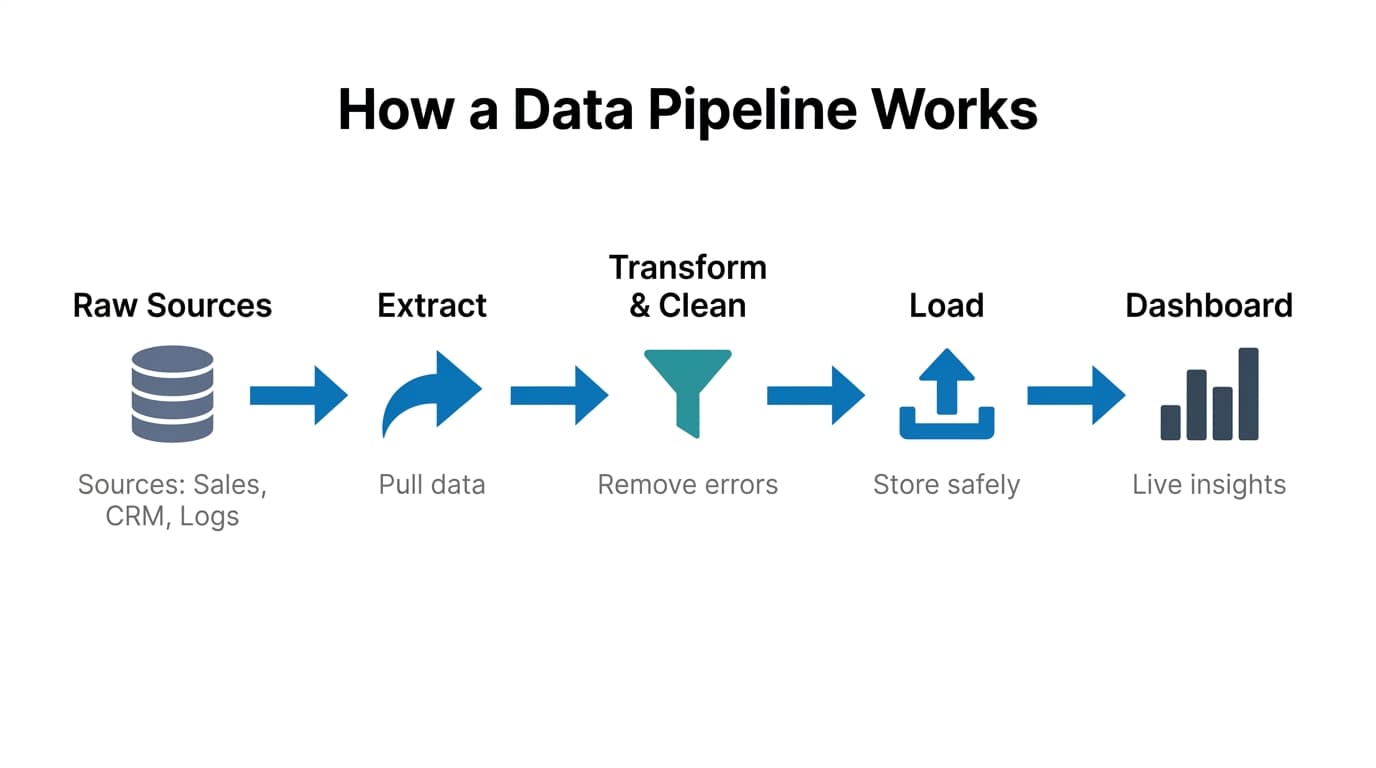
Think of a data pipeline as a sophisticated, automated irrigation system for your business. In the old days, you had to manually carry buckets of water (data) from various wells (sources) to your crops (reports), which was slow and prone to spills. A data pipeline installs pipes that automatically collect that water, filter out the debris (cleaning), and deliver it precisely where it is needed—right to your dashboard. It takes raw, messy information, refines it, and ensures it arrives in a clear, ready-to-use format, allowing you to see the health of your organization at a single glance, 24/7.
Key Takeaways
- Speed to Insight: Pipelines remove manual labor, turning raw data into actionable intelligence in seconds rather than days.
- Single Source of Truth: By consolidating information from different systems, you ensure every leader is making decisions based on the same, accurate facts.
- Scalable Growth: An automated pipeline grows with your organization, handling increasing volumes of data without requiring more headcount or manual effort.