
Why Most Organizations Are Sitting on Valuable Data They Never Use
Explain how data is often trapped in Excel files, emails, and paper records.
The Core Challenge
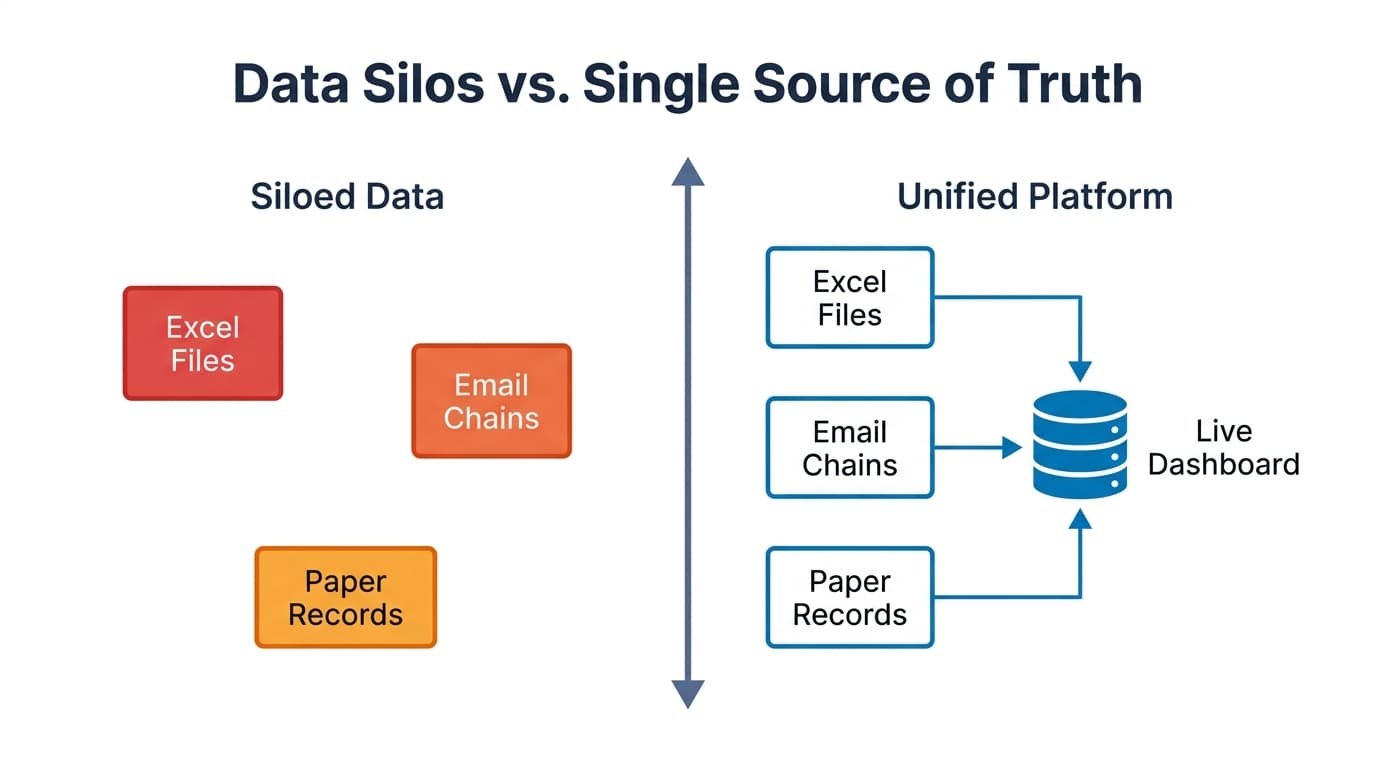
Across East Africa, from Nairobi’s tech hubs to regional NGOs, a silent crisis is stifling growth: "Data Siloing." Most organizations are sitting on a goldmine of insights, yet this information remains trapped in fragmented Excel files, buried in endless email chains, or gathering dust in physical filing cabinets. This isn't just a storage issue; it is a structural barrier. When your data lives in isolation, it cannot speak to your strategy, leaving your team to make high-stakes decisions based on intuition rather than the hard evidence already sitting under their noses.
Why It Matters
The cost of inaction is far higher than the cost of modernization. When data is disconnected, you lose visibility into your operations, miss emerging market trends, and fail to identify operational leaks before they impact your bottom line. For an executive, this "dark data" represents a massive opportunity cost: resources are misallocated, customer needs remain unmet, and your organization remains reactive instead of proactive. In a rapidly evolving economy, continuing to operate with fragmented information is effectively choosing to run your business with one hand tied behind your back.
The Practical Solution
You don’t need a multi-million dollar AI overhaul to unlock your data; you need a culture of centralization. Start by adopting a "Single Source of Truth" policy, where manual spreadsheets are migrated into a unified, cloud-based platform accessible to key stakeholders. By automating the collection of your daily inputs—whether sales figures or project impact reports—you transform raw data into a live dashboard. This shift from manual tracking to automated visibility empowers your leadership team to see the "big picture" in real-time, allowing you to pivot strategies with confidence.
Key Takeaways
- Data trapped in silos is a depreciating asset; move it to a centralized cloud environment to make it actionable.
- Visibility is the foundation of agility; real-time reporting allows you to solve problems before they become crises.
- Technology should serve your strategy, not complicate it; focus on simple, scalable tools that your entire team can adopt immediately.