
Turning Monitoring & Evaluation Data into Better Decisions
Making M&E proactive instead of reactive.
The Core Challenge
Most organizations treat Monitoring & Evaluation (M&E) as a rear-view mirror—a compliance exercise used to report on what has already happened. In the fast-paced markets of East Africa, this reactive approach creates a dangerous "data lag." When leaders wait for end-of-year reports to see if a project is working, they are essentially managing by history rather than strategy. The data is often accurate, but it arrives too late to influence the outcome, leaving teams to troubleshoot problems that could have been mitigated months earlier.
Why It Matters
The cost of inaction is measured in wasted capital, missed market opportunities, and eroded stakeholder trust. When M&E is relegated to a post-mortem tool, you are flying blind through a volatile economic landscape. Every month spent waiting for a retrospective report is a month where resources are misallocated, operational inefficiencies compound, and your competitive edge blunts. For NGOs and businesses alike, reactive data leads to "sunk cost" traps, where you continue funding failing initiatives simply because the data didn't sound the alarm until the budget was already exhausted.
The Practical Solution
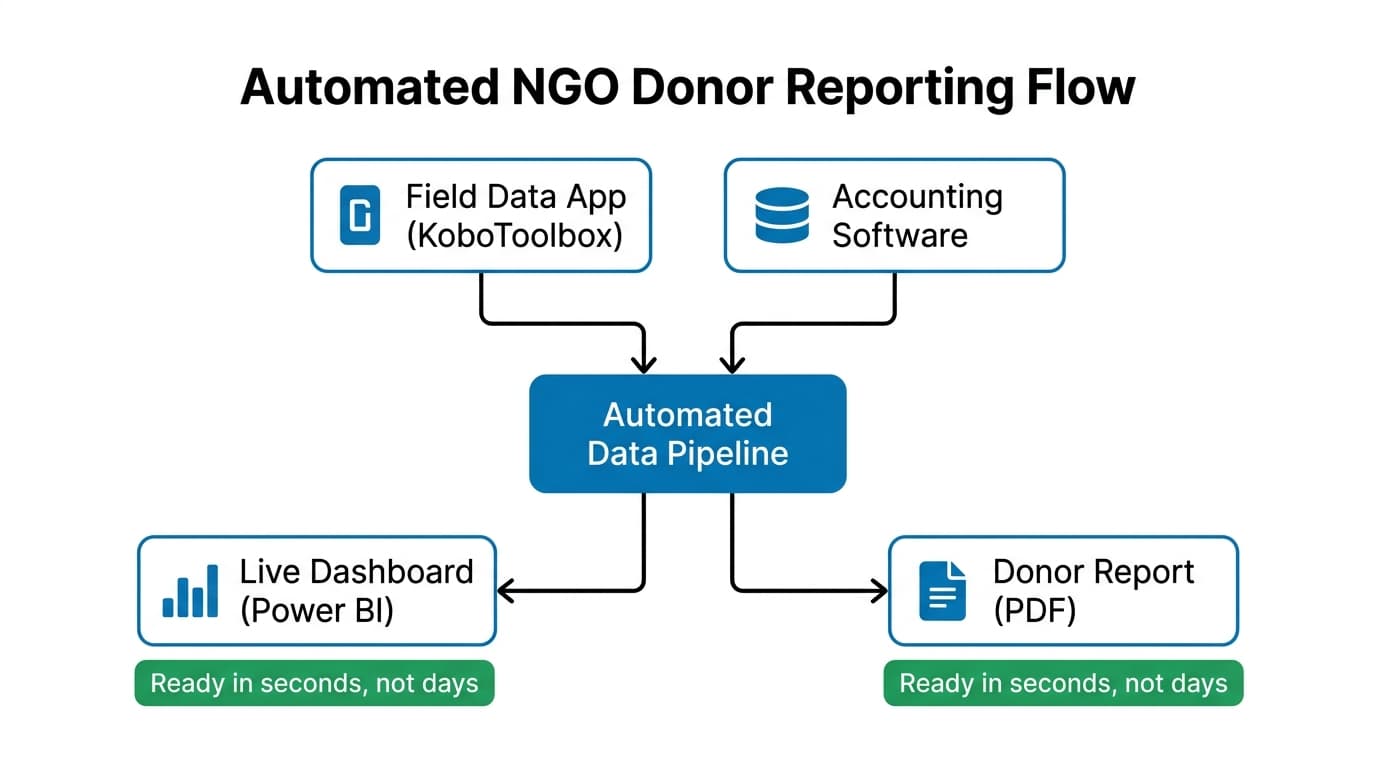
To turn M&E into a proactive engine for growth, you must shift from "reporting" to "real-time intelligence." This involves implementing lean, automated feedback loops that provide high-level performance snapshots on a weekly or bi-weekly basis. Instead of tracking hundreds of vanity metrics, focus on a "Vital Few" KPIs that act as early warning systems. By empowering frontline teams to capture data digitally and integrating it into simple, visual dashboards, you turn raw numbers into actionable insights. This allows leadership to pivot strategy, reallocate resources, and double down on successes while the window of opportunity is still open.
Key Takeaways
- Stop treating M&E as a compliance burden; view it as your primary dashboard for strategic agility.
- Prioritize high-frequency, low-friction data collection to identify bottlenecks before they become failures.
- Cultivate a culture of "data-driven pivots," where leadership is rewarded for adjusting plans based on real-time evidence rather than sticking to outdated project blueprints.