
Five Signs Your Organization Needs a Data Warehouse
Target NGOs and medium-sized companies.
The Core Challenge
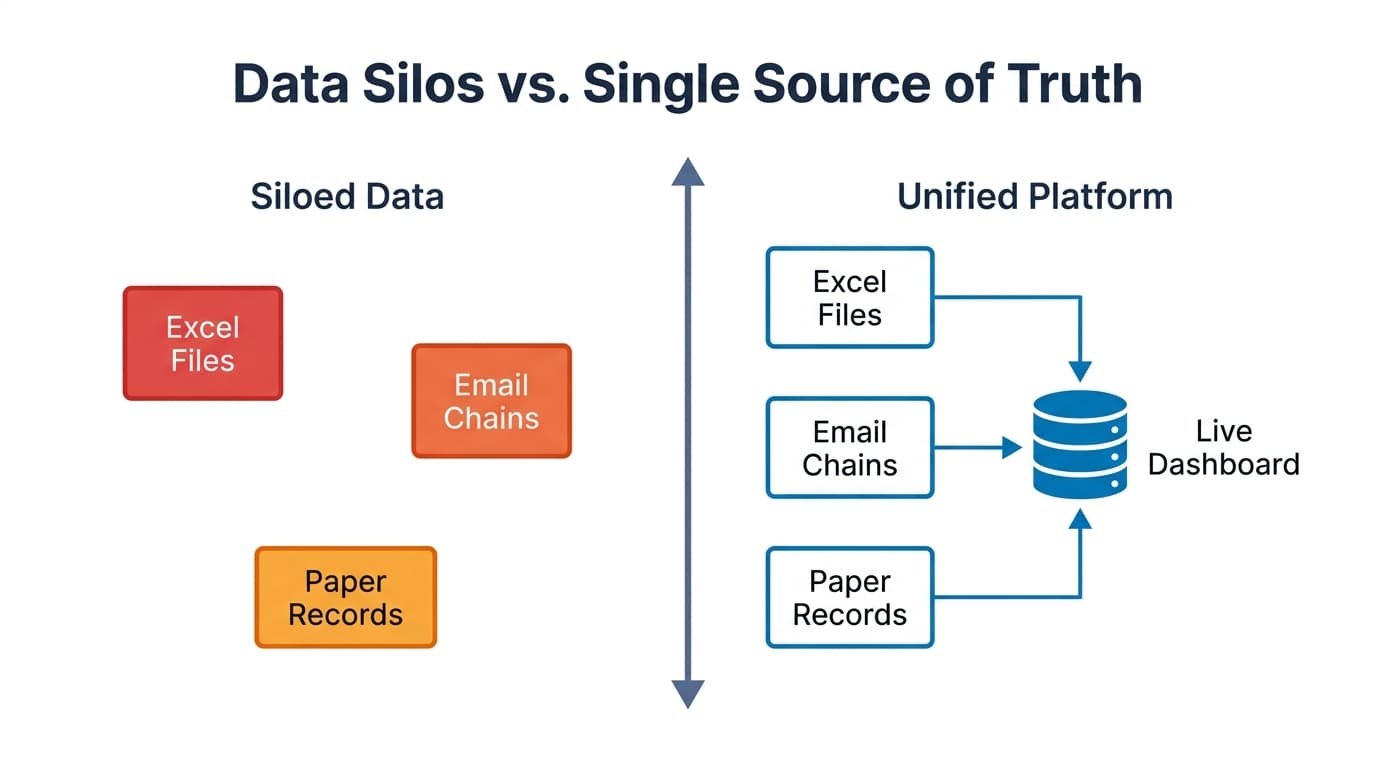
In the fast-paced landscape of East African business and development, data is your most valuable asset, yet it is often trapped in digital silos. Whether you are an NGO juggling donor reports across multiple regions or a medium-sized enterprise managing inventory, sales, and payroll in disconnected spreadsheets, you are likely suffering from "data fragmentation." When your information lives in separate systems that don’t talk to each other, you lose the ability to see the "big picture," forcing your leadership team to make high-stakes decisions based on gut feeling rather than cold, hard facts.
Why It Matters
The cost of disconnected data is far higher than just administrative frustration; it is a direct drain on your bottom line and mission impact. When your team spends hours manually reconciling reports, you aren't just wasting time—you are incurring an "opportunity cost." Inaccurate or delayed reporting leads to missed market opportunities for businesses and potential funding gaps for NGOs. In an increasingly competitive environment, the organization that can synthesize its data fastest wins. If you cannot track your performance in real-time, you are essentially flying blind while your competitors are using radar.
The Practical Solution
A data warehouse is the answer to this complexity. Think of it as a single, secure, and centralized "library" for your organization’s information. It automatically pulls data from your accounting software, field reports, CRM, and payroll systems, cleaning and organizing it into one place. You don’t need to be an engineer to use it; it simply creates a "single source of truth" that feeds into simple, professional dashboards. This allows your team to stop chasing numbers and start acting on insights, ensuring that every shilling or donor dollar is accounted for with total clarity.
Key Takeaways
- You are spending more time cleaning and merging spreadsheets than actually analyzing the results.
- Your leadership team receives conflicting reports from different departments, leading to decision paralysis.
- You struggle to provide real-time, audit-ready impact reports to donors, board members, or stakeholders.
- You lack a historical view of your data, making it impossible to forecast trends or plan for future growth.
- Your team is slowed down by manual data entry, increasing the risk of human error in critical business reporting.