
From Excel to Insights: Modernizing NGO Data Management
The journey from manual sheets to modern data stacks.
The Core Challenge
For many NGOs across East Africa, the "data stack" still begins and ends with fragmented Excel spreadsheets. While these sheets are familiar, they create a dangerous cycle of manual data entry, version control nightmares, and siloed information. When impact data is locked in offline files, leadership teams are forced to make strategic decisions based on lagging indicators rather than real-time evidence, effectively blinding the organization to the very outcomes they strive to achieve.
Why It Matters
The cost of inaction is measured in lost funding and diminished impact. In an increasingly competitive donor landscape, transparency and speed are your greatest assets. When your data is stuck in static rows and columns, you cannot pivot programs quickly in response to community needs, nor can you provide the instant, compelling reporting that major donors now demand. Relying on manual processes isn't just inefficient; it is a structural risk that prevents your organization from scaling its mission effectively.
The Practical Solution
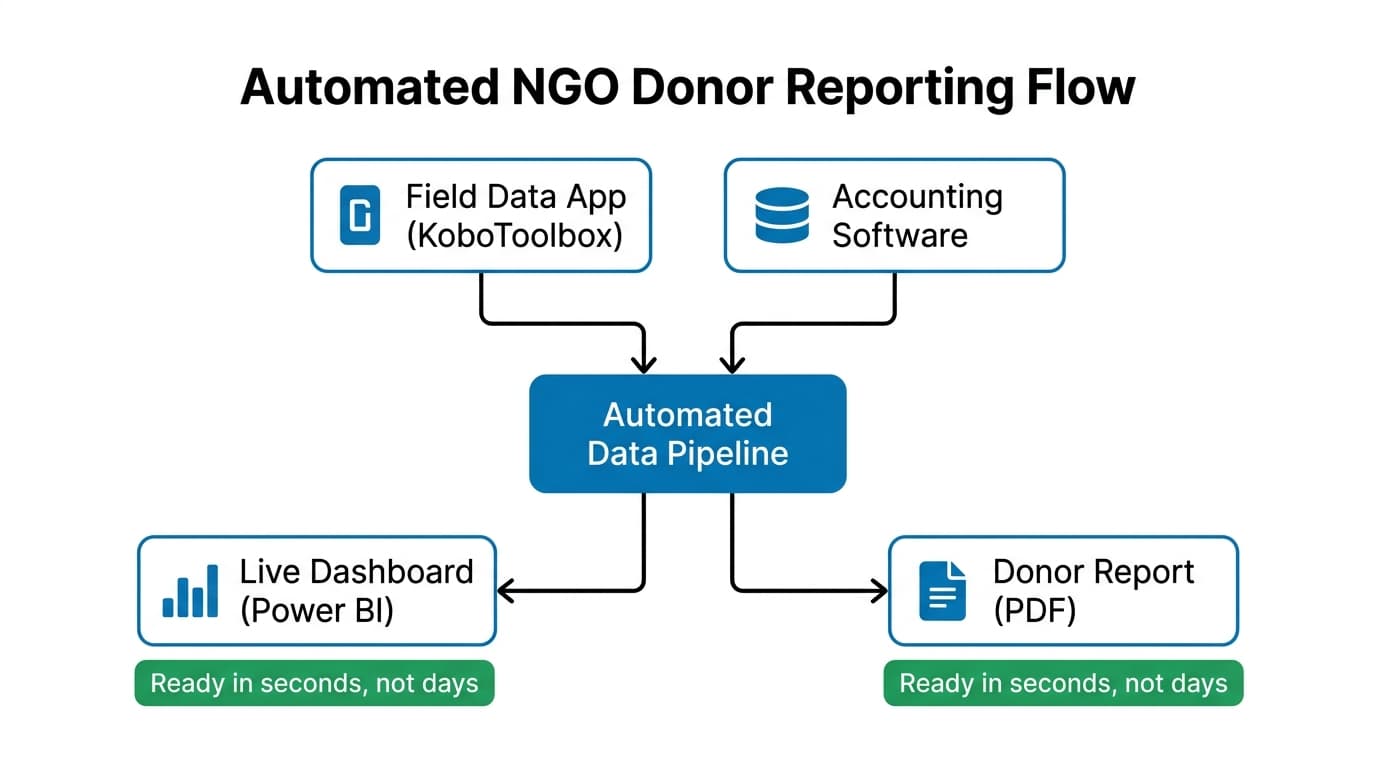
Modernizing your data management does not require an army of software engineers. The shift involves moving to a "centralized source of truth"—a cloud-based ecosystem where data is collected via mobile apps, stored in a secure database, and visualized through automated dashboards. By automating the flow of information from the field to the boardroom, you replace hours of manual reporting with live, interactive insights. This transition turns your data from a burdensome administrative task into a powerful compass for your leadership team.
Key Takeaways
- Visibility: Replace reactive reporting with real-time dashboards that highlight what is working and what isn't.
- Efficiency: Automate data collection to reduce human error and free up your team to focus on community impact rather than data entry.
- Donor Confidence: Build stronger, long-term partnerships by providing transparent, data-backed evidence of your organization's effectiveness.