
Common Dashboard Mistakes
What not to do when visualizing data.
The Core Challenge
In the fast-paced markets of East Africa, data is your most valuable asset, yet most leadership dashboards are failing to provide clarity. The most common pitfall is "clutter-by-default"—cramming every available metric onto a single screen. When you try to show everything, you end up showing nothing. Instead of a strategic compass, executives are often left staring at a digital mosaic of noise that obscures the actual health of the business, leading to delayed decisions and missed growth opportunities.
Why It Matters
The cost of a poorly designed dashboard is far greater than just bad aesthetics; it is the cost of "analysis paralysis." When your team spends more time deciphering what a chart means than actually taking action, you lose your competitive edge. In a region where agility often determines market leadership, a cluttered dashboard acts as a bottleneck. You cannot steer a business effectively if your view of the road is blocked by irrelevant data points that don't drive bottom-line results.
The Practical Solution
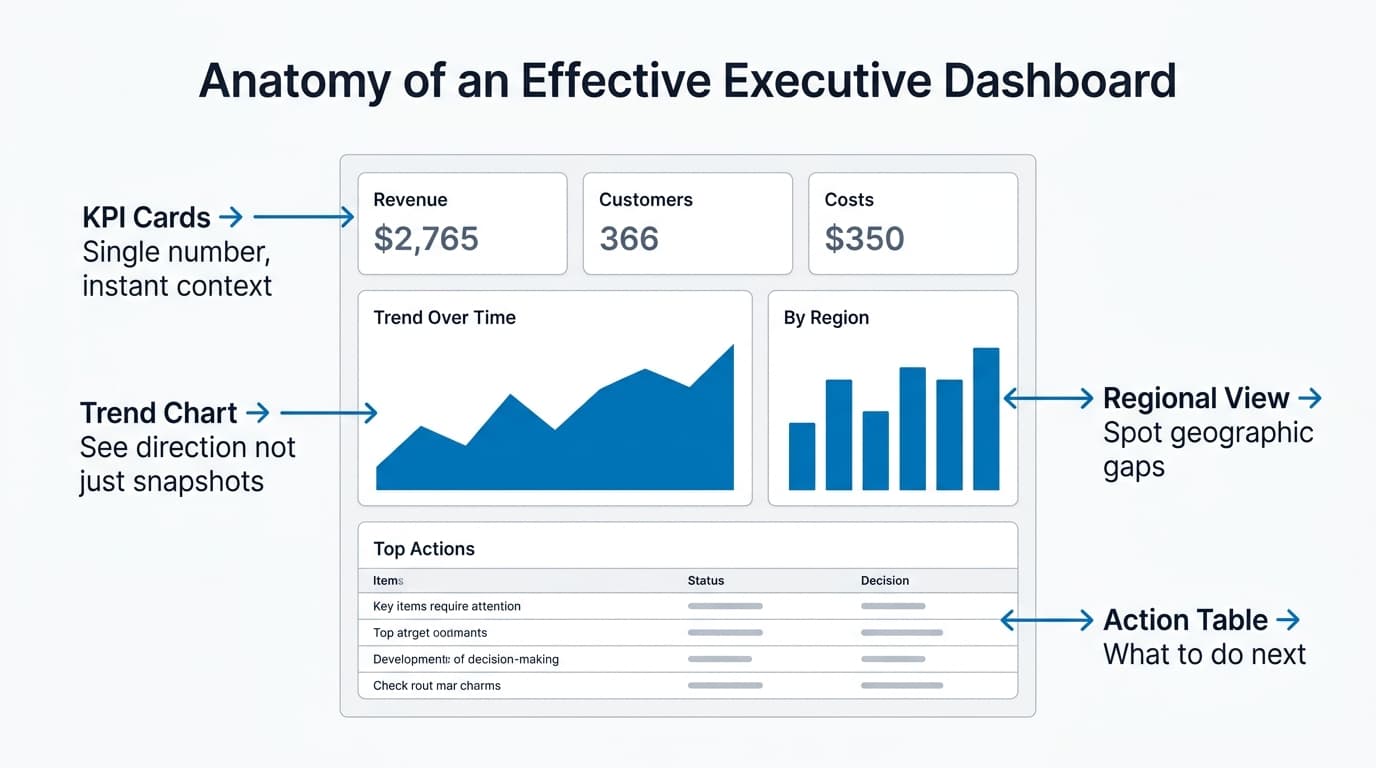
The secret to a high-impact dashboard is ruthless prioritization. Follow the "Five-Second Rule": if a stakeholder cannot identify the business trend and the required action within five seconds, the design is too complex. Strip away the vanity metrics—the data that looks impressive but doesn’t change your strategy—and focus exclusively on Key Performance Indicators (KPIs) that track your primary objectives. Use clean, simple visuals like bar charts or trend lines, and ensure that every graph answers one specific business question.
Key Takeaways
- Kill the Clutter: Remove any chart or metric that does not directly influence a high-level business decision.
- Context is King: Raw numbers are meaningless without benchmarks; always compare performance against targets or previous periods.
- Design for Action: Every dashboard should lead to a "So what?" moment that prompts an immediate operational or strategic shift.