
Executive Dashboards Every CEO Should Have
The metrics that actually matter at the top.
The Core Challenge
In the fast-paced markets of East Africa, CEOs are often drowning in data but starving for insight. Many leaders rely on fragmented reports from different departments, leading to a "fog of war" where critical trends are buried under operational noise. When you lack a unified view of your organization’s health, you aren't managing the business—you are reacting to crises.
Why It Matters
The cost of relying on outdated or disconnected data is high: missed market opportunities, misallocated capital, and eroded competitive advantage. In an environment defined by rapid shifts in consumer behavior and regulatory landscapes, the inability to pivot quickly based on real-time evidence can be the difference between scaling your vision or watching your market share evaporate.
The Practical Solution
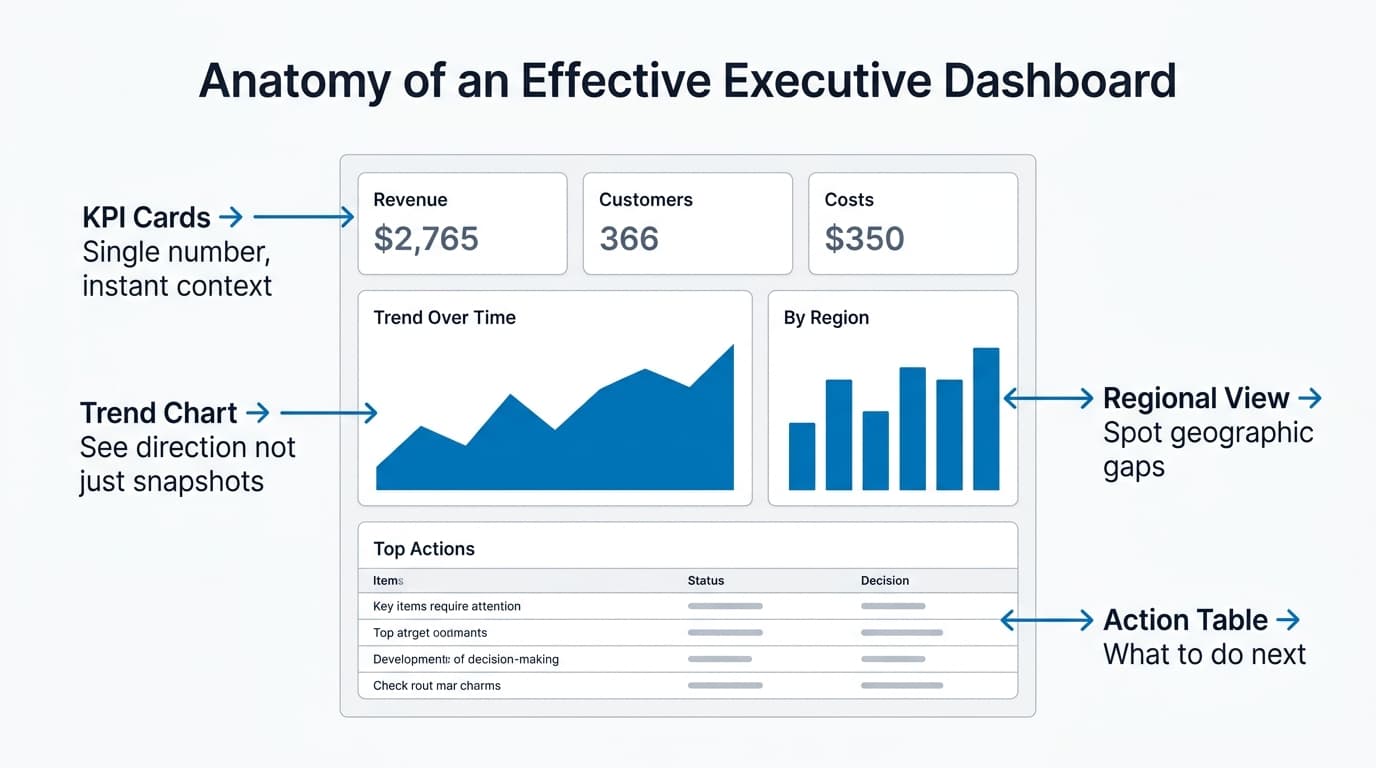
An effective executive dashboard isn’t a technical marvel; it is a strategic compass. It should distill your entire organization into three to five high-level metrics that track your North Star—whether that is cash flow velocity, customer acquisition cost, or operational impact. By automating the flow of this data into a single, visual interface, you move from manual reporting to proactive decision-making, ensuring every executive action is backed by the current reality of your business.
Key Takeaways
- Focus on Leading Indicators: Track the metrics that predict future revenue or impact, rather than just historical performance.
- Prioritize Cash & Runway: In volatile markets, visibility into liquidity and burn rate is your most critical safety net.
- Keep it Actionable: If a metric on your dashboard doesn't trigger a specific strategic conversation or decision, remove it to reduce noise.