
How Small Businesses Can Start Using AI Without a Huge Budget
Affordable entry points to automation.
The Core Challenge
For many business leaders and NGOs across East Africa, the promise of Artificial Intelligence often feels like a luxury reserved for Silicon Valley giants. The perception is that AI requires massive capital investment, dedicated data science teams, and complex infrastructure. In reality, the biggest challenge isn't the cost; it's the misconception that AI is an "all-or-nothing" enterprise, leaving valuable operational efficiencies on the table while competitors begin to streamline their workflows.
Why It Matters
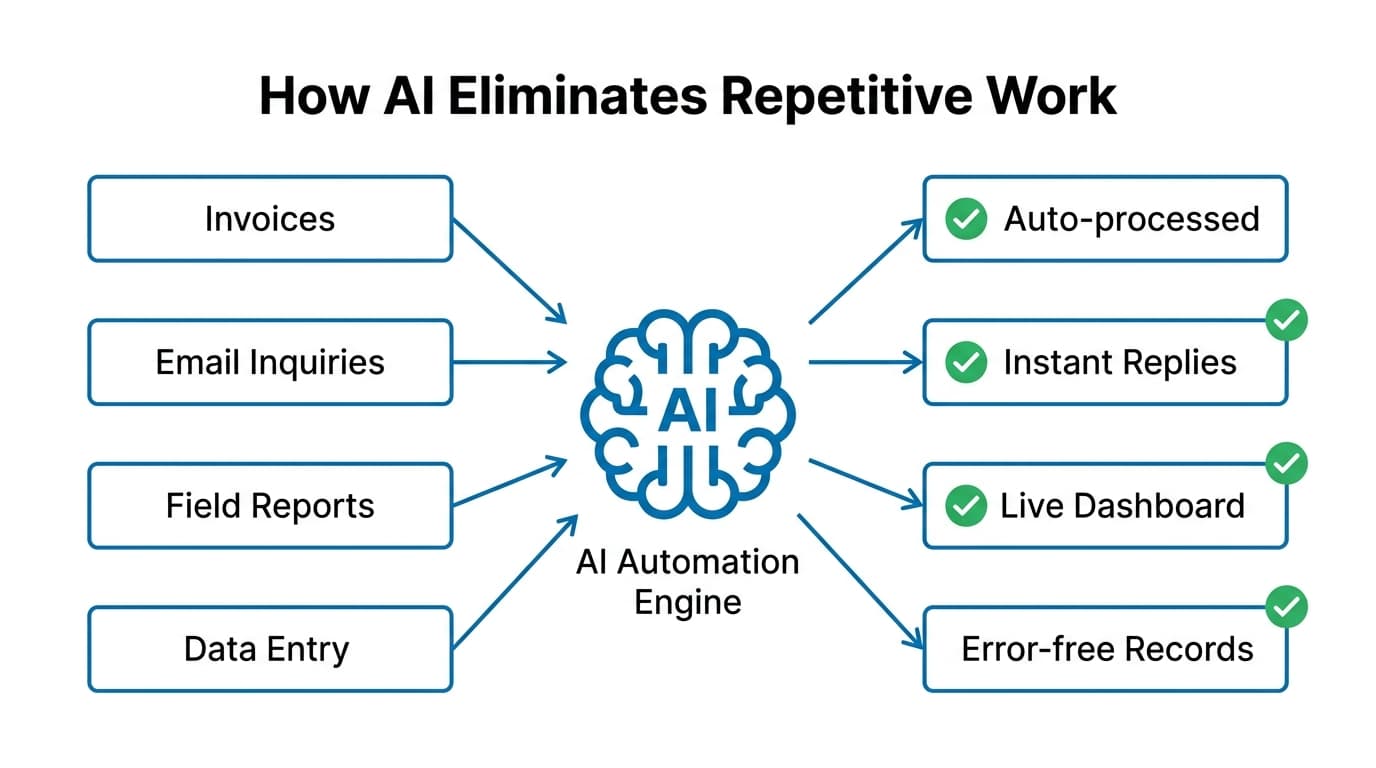
In an increasingly competitive landscape, the cost of inaction is high. While you are manually processing invoices, drafting routine communications, or struggling with data entry, your peers are using AI to reclaim hours of productivity. By failing to adopt even basic automation, you are effectively accepting lower margins and slower response times. In our fast-moving regional market, being the last to adopt these tools is a strategic disadvantage that compounds daily, widening the gap between your organization and the leaders in your sector.
The Practical Solution
You don't need a custom-built algorithm to see results; you need to start with "off-the-shelf" intelligence. Most businesses can achieve immediate ROI by using accessible, subscription-based AI tools—like ChatGPT for drafting reports, Canva for automated design, or Zapier to link your email, accounting, and CRM systems. These platforms act as a digital force multiplier, allowing a lean team to perform the work of a much larger department. By integrating these plug-and-play tools into your existing daily routines, you can automate the mundane and focus your human capital on high-value strategy and community impact.
Key Takeaways
- Start small by automating repetitive administrative tasks rather than attempting a total digital overhaul.
- Leverage existing, low-cost subscriptions that integrate directly with the software you already use.
- Prioritize AI tools that solve a specific "pain point," such as customer communication or data organization, to ensure immediate time-savings.